
Hispanic Business TVHispanic Business TV
  • Featured
  • Popular Cities
    • Atlanta
    • Boston
    • Chicago
    • Dallas
    • Denver
    • Houston
    • Las Vegas
    • Los Angeles
    • Miami
    • New York
    • Phoenix
    • Salt Lake City
    • San Antonio
  • Business
    • HBTV Toolbox
      • Social Media Management
  • Politics
  • HBTV Sports
    • MLB
    • MMA
    • NCAAF
    • NBA
    • NCAAM
    • NFL
    • NHL
  • Entertainment
  • Living
    • Culture
    • Latino Lifestyle
    • Education
    • Cannabis
Reading: Opinion | Phones and education technology deserve no place in Hong Kong’s classrooms
Share
Sign In
Notification Show More
Font ResizerAa
Font ResizerAa
Hispanic Business TVHispanic Business TV
Search
  • Featured
  • Popular Cities
    • Atlanta
    • Boston
    • Chicago
    • Dallas
    • Denver
    • Houston
    • Las Vegas
    • Los Angeles
    • Miami
    • New York
    • Phoenix
    • Salt Lake City
    • San Antonio
  • Business
    • HBTV Toolbox
  • Politics
  • HBTV Sports
    • MLB
    • MMA
    • NCAAF
    • NBA
    • NCAAM
    • NFL
    • NHL
  • Entertainment
  • Living
    • Culture
    • Latino Lifestyle
    • Education
    • Cannabis
Have an existing account? Sign In
Follow US
© 2024 hispanicbusinesstv All Rights Reserved.
Hispanic Business TV > Business > Tech > Opinion | Phones and education technology deserve no place in Hong Kong’s classrooms
Tech

Opinion | Phones and education technology deserve no place in Hong Kong’s classrooms

HBTV
Last updated: June 30, 2024 3:40 pm
HBTV
Share
7 Min Read
68c4402b 3ac7 496b 8bf0 Ec01a75f42e6 Cad4b21e.jpg
SHARE
Earlier this month, the Canadian province of Alberta, following in the footsteps of Quebec, Ontario and British Columbia, announced classroom restrictions on mobile phone use, with Education Minister Demetrios Nicolaides saying: “The risks to students’ mental well-being and academic success are real, and we must take steps now to combat these effects.”

In Los Angeles, the school board has approved a mobile phone ban, with board president Jackie Goldberg observing, “This is an addiction that is serious.”

The evidence has been building for a long time and has become overwhelming – there are at least 54,006 studies on academia.edu about “social media addiction”. It is no longer a question of the issue needing more study or the default cliché that we need to teach responsible internet use.

01:58

School smashes phones to warn students, sparking debate

School smashes phones to warn students, sparking debate

We are hooked on screens, mostly phones, that have been engineered to be addictive to use and to harvest our data to sell us things – and it is harming us mentally, physically and emotionally. The harm to children is even more so as they are in their developmental years.

Childhood, which used to be spent playing and imagining, is now centred on phones, a real-life horror story articulated in Haidt’s The Anxious Generation. And the billions of dollars being spent on useless “ed-tech” are draining badly needed education funds and putting it in the pockets of tech entrepreneurs.

So-called education technology has never been convincingly shown to have any benefit over “traditional” education methods in producing results. Head-to-head comparisons suggest it is grotesquely overrated, delivering poor results and even harm to the user.

But even if tech entrepreneurs could manage to fund even one study that showed superior results, what possible justification could be made for adding screen time to children’s lives when they are already spending too much of their day online?

People are surprised when I tell them there is scarcely proof that ed-tech works despite more than 455,000 education apps available for download. Dr Kathy Hirsh-Pasek, a Temple University professor who spoke recently on a Brookings Institute webinar called “Screens and children’s well-being”, has looked at 120 of the most popular education apps and found that only two “seemed to have some education value”.
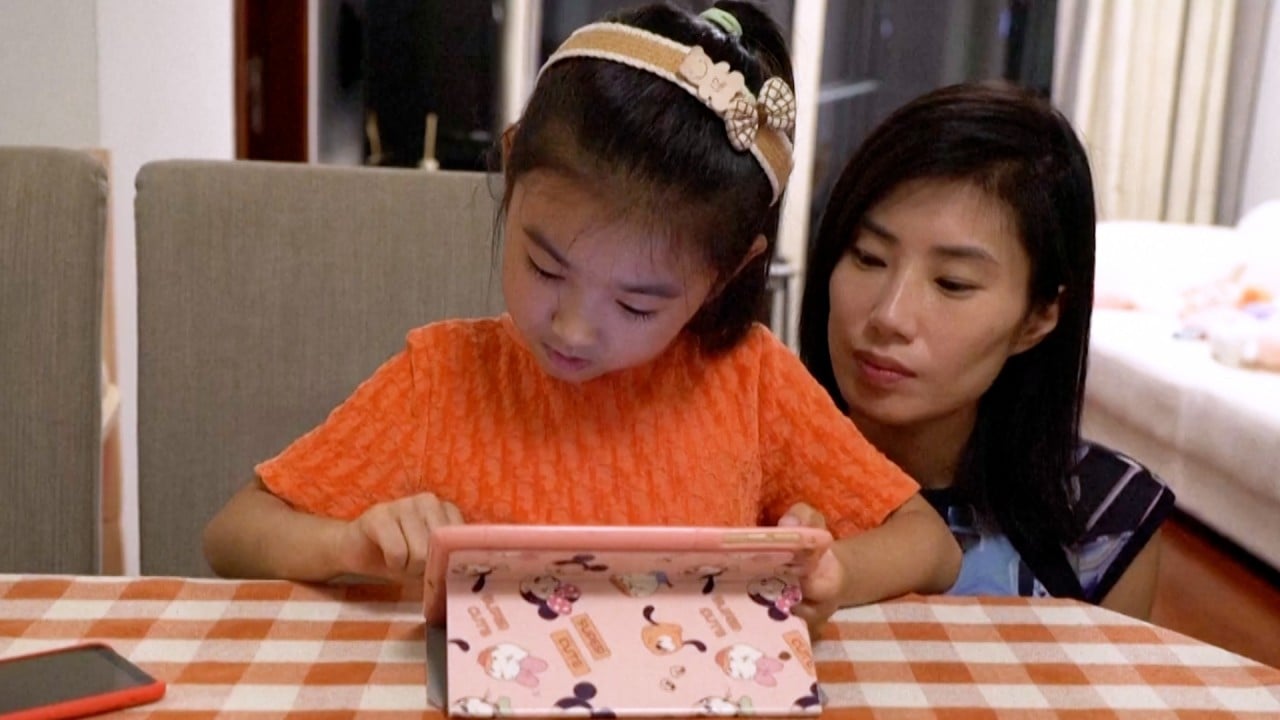
03:15

Chinese parents cast doubt on effectiveness of Beijing’s proposed law to limit children’s phone time

Chinese parents cast doubt on effectiveness of Beijing’s proposed law to limit children’s phone time

The reasons behind this unbridled propagation of ed-tech are rooted in beliefs and money.

My Nanzan University colleagues in Japan were surprised when I added master of business administration (MBA) coursework to my master of arts degree and TESOL (teaching English to speakers of other languages) certification instead of getting a doctorate of philosophy. But in my MBA classes, I learned of a widely and deeply held belief – an enthusiasm for technology – that new technology is always helpful and good.

If you read Unesco’s report, “An ed-tech tragedy?”, you will learn about the parallel rhetoric of “technology solutionism”: that technology will always solve the problem – even if it created it. The report details how the tech-heavy response during Covid-19 was built on criticism of education as “broken” and needing to be fixed. Marketing buzzwords like “digital transformation” had been worming their way into discussions about education for years.

The pandemic kicked the door open. Another marketing buzzword followed: “leapfrog”. We were going to leapfrog into a brave new world of better learning. Technology to the rescue. Lockdowns were a disaster for students but a boondoggle for ed-tech companies.
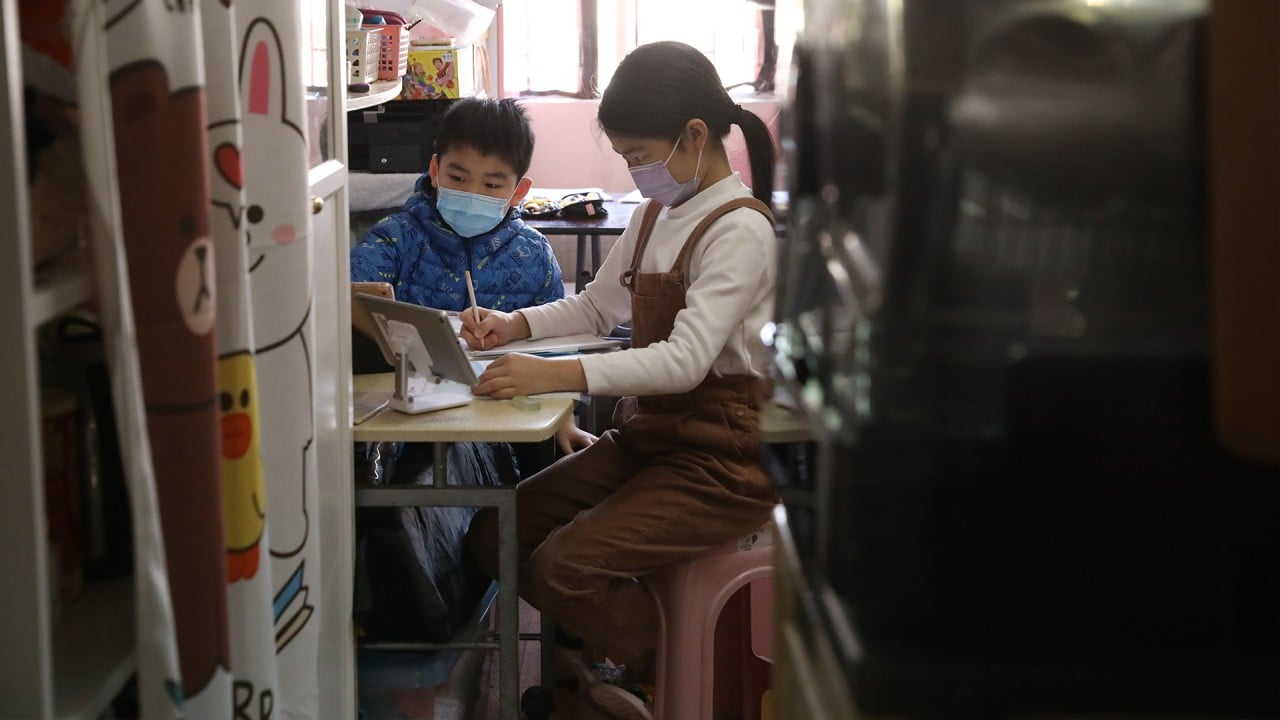
05:39

Covid-19: Hong Kong’s needy pupils sidelined by online learning one year since class suspension

Covid-19: Hong Kong’s needy pupils sidelined by online learning one year since class suspension

Educators are insecure about criticising ed-tech. Critics are invariably labelled as “traditional”, with a suggestion of the ultimate put-down: “old”. Ed-tech advocates simply rhapsodised about the “future” and the cash poured in. A title of a recent email I received from The Edge, a newsletter from the Chronicle of Higher Education, says it all: “Is even unsexy ed tech worth US$800 million?”

In Hong Kong, the situation is critical. I recently carried out English reading tests on primary schoolchildren in Kwai Hing and every student was a minimum of three years behind and reading comprehension skills were nonexistent. Many students cannot even begin the process of solving a problem.

In the words of one girl: “I hate ‘hard’.” I could write volumes about the Hong Kong children I have met who have been ruined by screens. Parents lament that they cannot stop their children’s non-stop phone use. They cannot stop their own either, it seems.

This is why cutting out ed-tech and banning phones in schools make sense. Schools are controlled environments designed for learning. They offer a place for children to learn not only their subjects, but also about cooperation and socialisation. And despite being overworked, underpaid and all too easily criticised and blamed for everything, teachers in Hong Kong are, by and large, dedicated professionals.

It might sound unsexy but let us give them the support and resources to teach, and stop making tech entrepreneurs rich at the expense of our children’s lives.

Los Angeles native Robert Badal is an author, teacher and former corporate consultant and CEO speech-writer


Sign Up For Daily Newsletter

Be keep up! Get the latest breaking news delivered straight to your inbox.

By signing up, you agree to our Terms of Use and acknowledge the data practices in our Privacy Policy. You may unsubscribe at any time.
Share This Article
Facebook Copy Link Print
Share
Previous Article 458b9dfd3f9575ff7d68d7cf6d8d2c14.jpg FOX 5 AtlantaTriple digit temperatures reach metro AtlantaThings are heating up in the metro Atlanta area, here's what you need to know about this weekend's forecast to keep yourself and your loved….10 hours ago
Next Article 6449ade9be4a47.47478836 E1703192279231.jpeg Is marijuana, CBD allowed on cruise ships?
Leave a Comment Leave a Comment

Leave a Reply Cancel reply

Your email address will not be published. Required fields are marked *

Stay Connected

FacebookLike
XFollow
InstagramFollow
- Advertisement -
Ad imageAd image

Latest News

Research findings indicate new Latino population patterns in New York State
Latino Lifestyle
May 24, 2026
Texas burger brands outperform national chains
Houston
May 24, 2026
Raiders QB Fernando Mendoza Secures Cal Business Degree After Historic Indiana National Championship Run
Las Vegas
May 24, 2026
Tiempo with Joe Torres: Latino immigration, population trends change in New York, according to new research
Business
May 24, 2026

Advertise

  • Advertise With Us
  • Terms and Conditions
  • Privacy Policy
  • About Us
  • Contact

HispanicBusinessTV is your go-to source for the latest in Latino lifestyle, culture, and business news. Stay informed and inspired with our comprehensive coverage and in-depth stories.

Quick links

  • Advertise With Us
  • Terms and Conditions
  • Privacy Policy
  • About Us
  • Contact

Top Categories

  • Business
  • HBTV Sports
  • Entertainment
  • Culture

Sign Up for Our Newsletter

Subscribe to our newsletter to get our newest articles instantly!

© 2025 HispanicBusinessTV.com All Rights Reserved. A WooWho Network Digital Property.
Join Us!
Subscribe to our newsletter and never miss our latest news, podcasts etc..

Zero spam, Unsubscribe at any time.
Welcome Back!

Sign in to your account

Username or Email Address
Password

Lost your password?