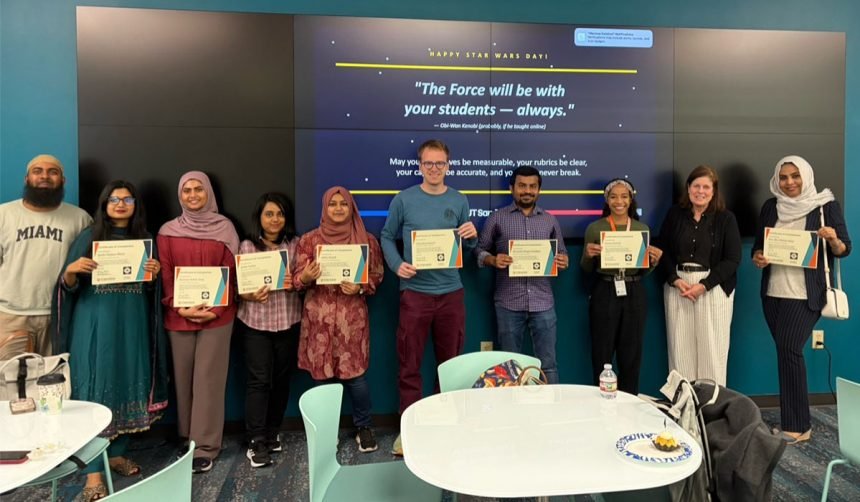
Graduate teaching assistants (TAs) from UT San Antonio are gaining more than just classroom experience. Through the Roadrunner Teaching Assistant Academy (RTAA), they are cultivating the teaching, leadership and communication skills needed to succeed in future opportunities in academia, industry and professional leadership.
The professional development program, which is currently open for fall 2026 registration, is designed to strengthen the instructional skills of graduate TAs and prepare them to create effective and meaningful learning experiences for their students.
Since the program began in 2021, nearly 280 graduate students have completed the RTAA curriculum, with participants demonstrating higher levels of engagement and persistence compared to their peers.
The university’s Office of Institutional Research and Analysis found that graduate TAs who participated in RTAA in fall 2023 showed a 100% next-term persistence rate, about 5% higher than those who did not complete the program. RTAA participants in fall 2022 also showed a 3.4% increase in yearly persistence compared to their peers.
“The academy is equipping emerging educators with the skills, confidence and pedagogical foundation needed to create meaningful learning experiences,” said Heather Trepal, vice provost for graduate and postdoctoral studies and dean of the Graduate School. “By investing in graduate assistants as teachers, we can strengthen both student success and the future of higher education.”
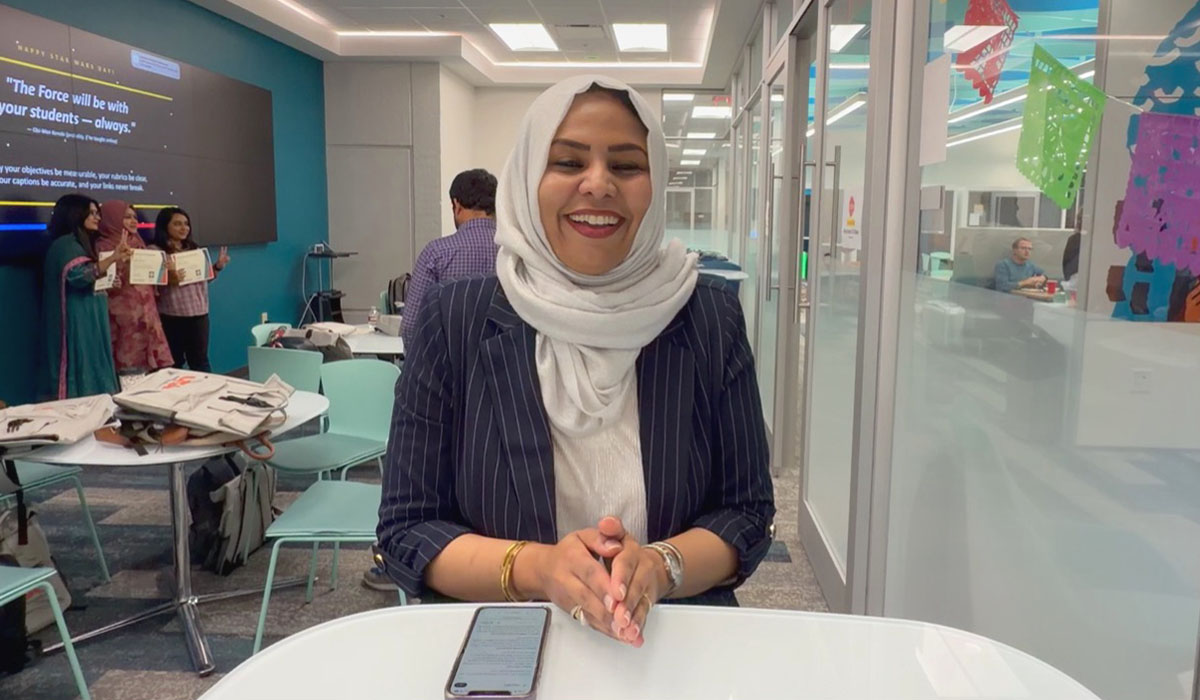
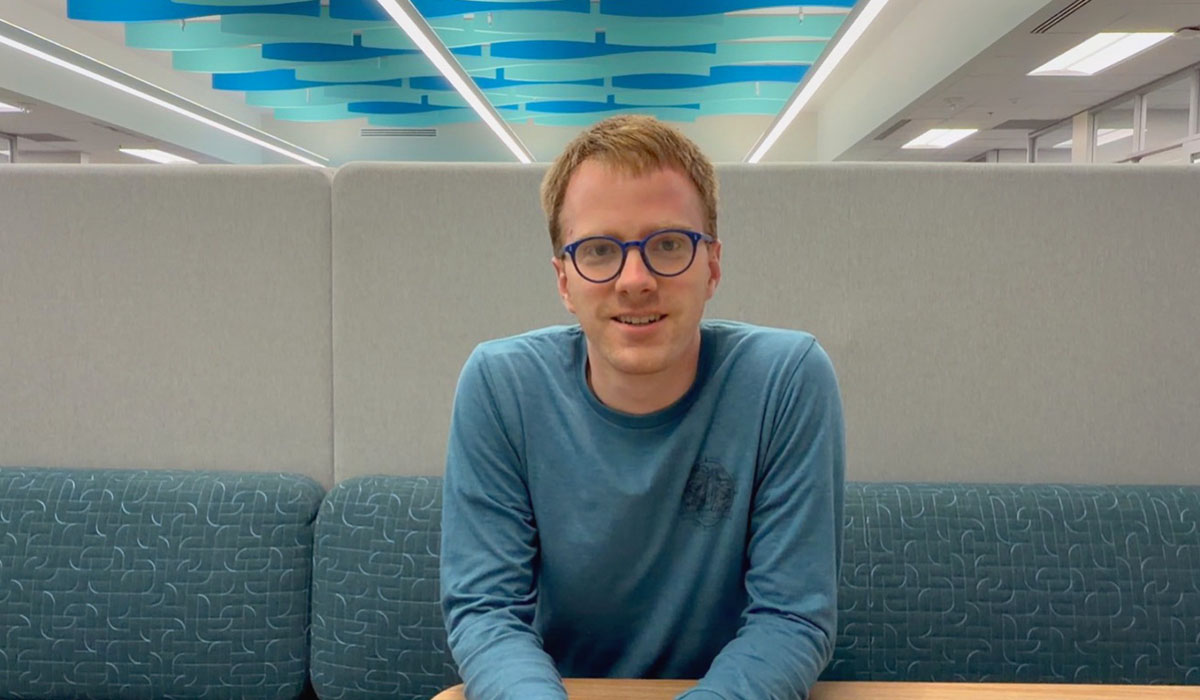
UT San Antonio doctoral students Calix Barrus (left) and Isra Hilal each honed their teaching skills through the RTAA program.
Building confidence in first-time teachers
RTAA is a collaboration between the university’s Academic Innovation division and the Graduate School. It brings together graduate students from across disciplines at both the academic and health campuses. Participants explore evidence-based teaching practices, new instructional technologies and innovative learning strategies that support the academic success of their students.
The graduate TAs also engage in monthly workshops and hands-on learning experiences that focus on topics such as lesson design, student engagement and assessment strategies.
For many participants, this support and instruction are critical during their first teaching experiences. This includes Calix Barrus, a student who is pursuing a PhD in computer science in the College of AI, Cyber and Computing (CAICC), who was able to transition into his first teaching role with greater confidence thanks to the academy.
“This was my first time teaching a class, and I was pretty nervous at the start of the semester,” said Barrus, who taught an undergraduate computer science course. “Getting to have some formal training from RTAA at the start of the semester really helped me feel more comfortable. My first semester started strong and ended up being a success.”
The program also supported the teaching development of Isra Hilal, a doctoral student studying information technology in CAICC.
“It has been a very important and valuable experience for me,” Hilal said. “I got lots of information about how to teach and how to grade students. It helped me a lot during my teaching assistant role in the department.”
Real-world applications
Throughout the program, academy participants complete various application-based activities that connect workshop concepts directly to classroom practice, such as creating course materials, exploring instructional tools and observing classes.
Participants developed their own Generative AI Use Statements, which are included in syllabi to inform students of how and when they can use AI for coursework. This encouraged the graduate TAs to think intentionally about how AI impacts teaching and learning, while becoming more deliberate in designing assignments and facilitating classroom discussions around AI usage.
They also completed workshops that explored polling and engagement technologies through iClicker, allowing them to discover new ways to use these tools for formative assessment, participation and knowledge checks in their own classrooms.
The Roadrunner Teaching Assistant Academy is designed to support graduate TAs in their current teaching roles while helping them articulate and showcase their instructional skills for the future.
The academy’s growth reflects a broader institutional commitment to preparing future educators who are thoughtful, innovative and student-centered in their teaching practices.