A case seeking to change how Hazleton Area School Board members are elected won’t end despite a Supreme Court decision weaking the federal Voting Rights Act.
“We believe our case against the Hazleton Area School District can still move forward successfully even under the heightened standards set forth by the Supreme Court,” Bernadette Reyes, counsel at the Voting Rights Project of University of California at Los Angeles, said in an email on May 1.
UCLA’s project helped two mothers file a lawsuit that said at-large voting for the school board discriminates against Hispanic candidates.
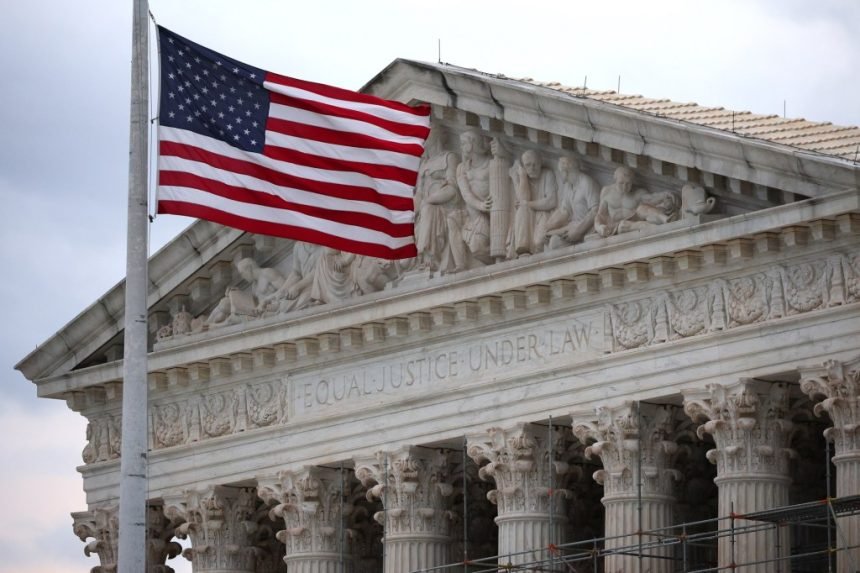
On April 30, the Supreme Court in a case about redistricting congressional districts to provide a second Black representative in Louisiana weakened Section 2 of the Voting Rights Act of 1965. The majority opinion in the 6-3 decision said challenges have to prove intentional discrimination, which dissenting Justice Elena Kagan wrote is “an almost insurrmountable barrier.”
Section 2 has been used to provide representation to minority groups in state legislatures, county governmenrts and school districts as well as Congressional seats.
In the Hazleton Area case, Aleida Aquino and Brendalis Lopez, who have children in the schools, said Hispanic candidates have never won seats on the school board. Hispanic voters make up 39.6% of the electorate in the school district, where 70% of students are Hispanic, the suit says.
But if the board were elected by nine districts, as was done before 1989, Hispanic voters could form a majority in one or two of the districts, their suit says.