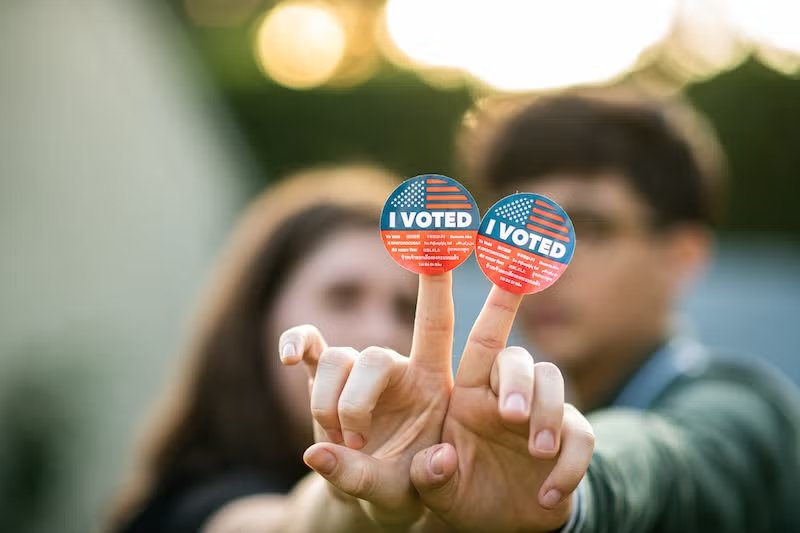
America’s leaders once inspired young people with electrifying speeches, challenged them to ask what they could do for the country, and painted visions of bright futures they could work together towards. But today’s politicians more often serve as symbols of an ossifying political system in which change seems impossible and young people are sidelined.
The United States has the highest share of politicians over 60 among wealthy OECD countries and one of the largest age gaps between legislators and their constituents. South Carolina Senator Lindsey Graham was the sixth member of the current Congress to die in office, while former Senate Majority Leader Mitch McConnell has been absent for more than a month because of health issues. At the same time, lawmakers are failing to address issues that are particularly important to younger voters, such as climate change and artificial intelligence.
Young people have taken notice. Contrary to popular belief, they haven’t given up on politics. Rather, they want a different kind of politics and are drawn to reforms like proportional representation with the potential to make democracy more representative, inclusive, and dynamic. New America and New Voters, a Gen Z–led nonprofit, recently heard how in a discussion with three politically active high school students.
Sania, Mae, and Troy are too young to vote, but that hasn’t prevented them from getting involved in politics in creative ways. Sania, from Texas, helps run after-school civics lessons. Mae, from Alabama, cohosts a podcast where she interviews candidates for office. Troy, from New Jersey, uses comedy shows and skits to teach media literacy. While their work has made them aware of American democracy’s flaws, it has also shown them how politics can bring people together to solve problems.