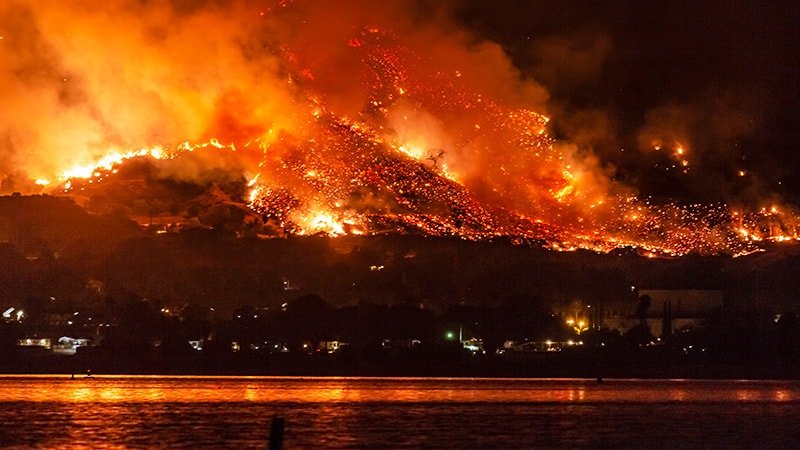
PHILADELPHIA — Exposure to wildfire smoke is linked to a 21% increased risk for dementia, early results from a large, longitudinal study suggest.
The risk appears to be higher for exposure to wildfire than for other types of air pollution. In addition, individuals living in economically disadvantaged areas may be at particularly high risk.
There has been a growing interest in identifying modifiable dementia risk factors, including social isolation, hearing loss, and traumatic brain injury, lead study investigator Holly Elser, MD, PhD, told Medscape Medical News.
“I would add environmental exposures to the list of potentially modifiable risk factors for dementia that are worth continued attention and scientific exploration,” said Elser, an epidemiologist and neurology resident at the Hospital of the University of Pennsylvania, Philadelphia.
The findings were presented on July 29 at the Alzheimer’s Association International Conference (AAIC) 2024.
Scientific Curiosity, Personal Experience
Evidence suggests long-term exposure to ambient air pollution, including fine particulate matter < 2.5 μm in diameter (PM2.5), is associated with dementia.
Wildfire smoke contains very small particles that are inhalable and may enter the central nervous system via the olfactory nerve and cross the blood-brain barrier, said Elser.
The researchers were interested in examining whether the PM2.5 produced by wildfires contributed to dementia risk in exposed individuals. “This is an increasingly common and important environmental exposure,” she said.
Motivated by both scientific curiosity and personal experience, Elser delved into the health risks associated with wildfires. While living in California during several severe wildfires, she experienced the choking smoke firsthand, prompting her to question the long-term health effects of such exposure.
For the study, Elser and colleagues reviewed health records of 1,225,053 Kaiser Permanente members in Southern California aged 60 years or older from 2008 to 2019 who were dementia free.
About 50% of individuals were women and married (54%). A majority self-identified as non-Hispanic White (49%) or Hispanic (26%).
The Kaiser Permanente Southern California catchment area includes 4.7 million people across 10 counties and is generally representative of the population of Southern California, said Elser.
Higher Risk With Wildfire Pollution
Researchers tapped into a number of data sources to measure overall PM2.5, weather variables, and wildfire occurrence. They extracted wildfire PM2.5 concentrations from the total PM2.5 concentration.
From daily measures of non-wildfire and wildfire PM2.5, they constructed a 3-year rolling average that was updated every quarter.
“For every 3-month period, there was a unique exposure value that reflected the average over the previous 3 years for both wildfires and non-wildfires,” said Elser.
Researchers identified dementia cases among the cohort using diagnostic codes and electronic health records.
They used pooled logistic regression to estimate the odds of dementia diagnosis associated with a 1 μg/m3 increase in the 3-year average of wildfire and non-wildfire PM2.5 and adjusted for age, sex, race and ethnicity, marital status, smoking status, comorbidities, economic status, and population density.
Results showed the odds of dementia diagnosis was 21% higher for every 1 μg/m3 increase in the 3-year average wildfire PM2.5 concentration (odds ratio [OR], 1.21; 95% CI, 1.06-1.38).
The risk was lower with other types of air pollution. For non-wildfire PM2.5, the odds of dementia diagnosis were 3% higher for every 3 μg/m3 higher 3-year average exposure (OR, 1.03; 95% CI, 1.02-1.04).
Elser explained that wildfire smoke, which results from burning organic materials, contains elevated concentrations of polycyclic aromatic hydrocarbons, known for their health risks. Additionally, wildfire PM2.5 particles are produced at much higher temperatures than ambient PM2.5, further increasing the health hazards.
Subgroup analyses revealed a stronger association between wildfire PM2.5 exposure and dementia among non-Hispanic Asian (OR, 1.47; 95% CI, 0.76-2.78), non-Hispanic Black (OR, 1.45; 95% CI, 0.89-2.35), and Hispanic (OR, 1.23; 95% CI, 0.89-1.69) individuals than among non-Hispanic White individuals (OR, 1.03; 95% CI, 0.88-1.22).
“In this subgroup analysis, our test of heterogeneity suggested that those differences were significant” (P for heterogeneity = .008), said Elser.
Socially Disadvantaged at Greater Risk
Investigators also found a stronger association between wildfire PM2.5 exposure and dementia in high-poverty counties vs low-poverty areas, which Elser said is one of the study’s most important findings.
She noted environmental exposures disproportionately affect racialized and economically marginalized groups, and these groups may further experience differential health effects of wildfire PM2.5 exposure.
There are a number of reasons for this. Poorer families may be unable to pay for air filtration systems to improve air quality during smoke events. Their employment status may limit their ability to control whether they spend time indoors or outdoors during such events.
“And members of marginalized groups may have amplified physiologic responses to environmental exposures, reflecting some combination of worse baseline health and the cumulative result of discrimination and chronic exposure to psychosocial stressors over the lifetime,” she explained.
Researchers also saw a stronger association among men than among women for wildfire PM2.5 exposure, although that result wasn’t that strong, said Elser.
She stressed the subgroup analyses in general were somewhat imprecise “just because anytime you split up the data into smaller groups, you have less statistical power.”
The research team didn’t look specifically at subgroups by age (eg, 60-year-olds vs 85-year-olds).
“It’s complicated by the fact that older populations are kind of a survivor population,” said Elser. “If you’ve lived to be 85, maybe you’re healthier than the 60-year-olds in the study.”
Wildfires have become more frequent in Southern California and are occurring earlier in the year than in the past.
“These are events that were once rare and geographically confined, and that’s increasingly not the case,” said Elser. And fires are now breaking out in places that didn’t typically experience them, including Hawaii.
To avoid exposure, Elser suggests checking weather apps that provide a daily air quality index. A level of 100 indicates hazardous air quality, “in which case you really want to be wearing a N 95 mask outside of your home.”
Everyone should make sure their home, and if possible their workplace, has an effective air filtration system. Those with cardiorespiratory disease such as chronic obstructive pulmonary disease may want to consider taking extra precautions.
Elser would like the study to motivate further research in this area to identify ways to protect public health. “I hope it inspires others to try to understand mechanistically why we observe this association, to replicate our findings in other populations, to continue to examine heterogeneous effects, and to identify population subgroups.”
Wildfires More Frequent, Severe, Prolonged
Commenting on the study, Claire Sexton, DPhil, senior director of scientific programs and outreach, Alzheimer’s Association, called the study large and “elegant” and noted it included a socioeconomically diverse population.
While previous research has examined the impact of air pollution as a whole on cognitive outcomes, including risk for cognitive decline, this new study “singles out the importance of wildfire smoke,” said Sexton.
She noted that an estimated 44 million people worldwide are exposed to unhealthy air quality due to wildfires, which are becoming more frequent, severe, and prolonged.
“This affects not only respiratory health but also cardiovascular health and the nervous system,” said Sexton. “Highlighting this issue as a significant risk factor and raising awareness is extremely important.”