North Carolina officials are considering ways to regulate sales of cannabis, in anticipation of the possibility of the legalization of marijuana in the state.
Recreational and medical marijuana are illegal in North Carolina, except for sales allowed on the Eastern Band of Cherokee Indians’ tribal land. Republican state lawmakers have discussed the possibility of legalizing medical marijuana over the years, but it has failed to pass. Democratic Gov. Josh Stein has pushed for broader legalization of marijuana for medical or recreational use.
A state advisory council met Friday to examine government-controlled cannabis markets and hear from the North Carolina Alcoholic Beverage Control Commission, which could provide a regulatory roadmap for state leaders who are examining regulatory oversight, licensing, compliance and manufacturing.
Stein, who created the North Carolina Advisory Council on Cannabis, said last year that he saw North Carolina’s state-run liquor stores as one possible model for regulating marijuana and hemp-derived THC products. “Let’s have a system actually not very dissimilar from the ABC system,” Stein told WRAL in June 2025. “We have controlled sales and people know what they’re buying.”
And while no decision has been made on who would regulate cannabis sales and licenses, some see the ABC itself — and not just something like it — as a natural fit for regulation. ABC handles liquor licenses, ABC retail sales and inspections of some businesses. Applying that framework to cannabis might be easier than creating an agency from scratch.
“ABC probably has more resources than any other agency currently because they’re doing the same thing with alcohol,” said Jason L. Keith, civil criminal attorney for NXTGen Law in Greensboro.
North Carolina is one of 17 states that directly controls the sale and distribution of liquor. Its 171 local ABC boards operate 452 stores across the state. In fiscal years 2024 and 2025, the ABC system generated $713 million and $696 million in public revenue, respectively.
That money went to the state’s General Fund, local governments, law enforcement, alcohol education, rehabilitation and health services, according to the State Auditor’s office.
States that regulate adult-use cannabis have generated between $33 million and $552 million in annual tax revenue. About $3 billion of dollars was spent on illegal pot in 2022, according to a report released in April by the state council.
The council’s efforts aren’t just about money and marijuana. Other intoxicating cannabinoid products, such as hemp-derived THC gummies, are unregulated and widely available across North Carolina. Many lawmakers and Stein say that poses a danger to consumers.
“The state now faces a choice about whether to continue allowing this marketplace to operate without comprehensive oversight or to establish a regulatory framework designed to protect the health, safety, and well-being of North Carolinians,” the cannabis council said in its April report.
Oversight ‘handcuffs’
Renee Metz, an assistant general counsel for the ABC commission, said Friday that the commission would have to grow if it were to oversee cannabis sales the way it does liquor. “I would love to have more than three commissioners because it really kind of handcuffs us,” Metz told the council Friday.
Metz said the commission would benefit from having smaller groups handle functions such as rules, probable-cause matters or applicant approvals.
She said that could become particularly important if the commission were responsible for approving cannabis businesses.
“If the commission were to become the cannabis applicant approval commission type of thing, it would be nice to have subsets where you know two or three people could go off and make decisions without the full commission having to vote,” Metz said.
She said having only three commissioners can create problems if one has to recuse themselves or the other two disagree.
The discussion is another step in Stein’s push to work through the mechanics of a potential legal market while the Republican-led General Assembly remains divided over how to handle cannabis products, which include marijuana as well as hemp-based CBD and THC products..
Stein formed the North Carolina Advisory Council on Cannabis last year, bringing together law enforcement officials, bipartisan lawmakers, health experts, farming interests and others. The group has since recommended creating a regulated market allowing licensed cannabis sales to adults. A final report with more detailed recommendations is expected later this year.
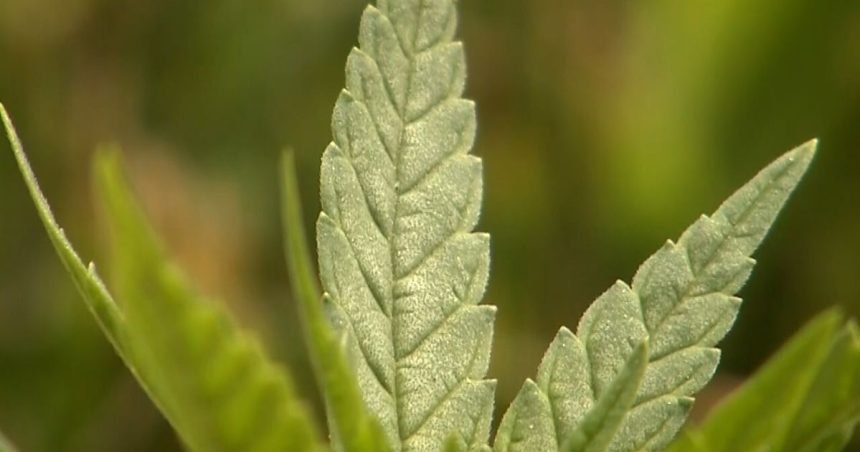
Hemp and marijuana both contain THC, but hemp is legal in the state because it contains THC at far lower levels than marijuana does — enough to impart some side-effects that users seek out, but not enough to get people high.
The advisory council has recommended regulating intoxicating cannabis products under a unified system rather than creating separate frameworks based on whether a product is classified as hemp or marijuana.
All the hypothetical regulation hinges on the widespread legalization of cannabis. That’s up to lawmakers.
The General Assembly has considered proposals in recent years to legalize medical marijuana and separately regulate other intoxicating hemp products, but lawmakers have not agreed on a comprehensive approach.
Earlier this month, House lawmakers delayed action on legislation targeting hemp-derived THC products amid concerns from law enforcement and businesses over how far the restrictions should go.
Supporters said the changes were necessary to stop children from being allowed to buy the products. Supporters said the law was so strict it would’ve banned nearly all hemp-based products, for people of any age.
Medical marijuana legislation has also repeatedly stalled. The Senate has approved versions of the GOP titled North Carolina Compassionate Care Act, which would create a tightly regulated medical cannabis program. It passed the state Senate multiple times in recent years but has failed to clear the House.
Since then, House Speaker Destin Hall has shown no interest in passing any type of legalization bill to cannabis.