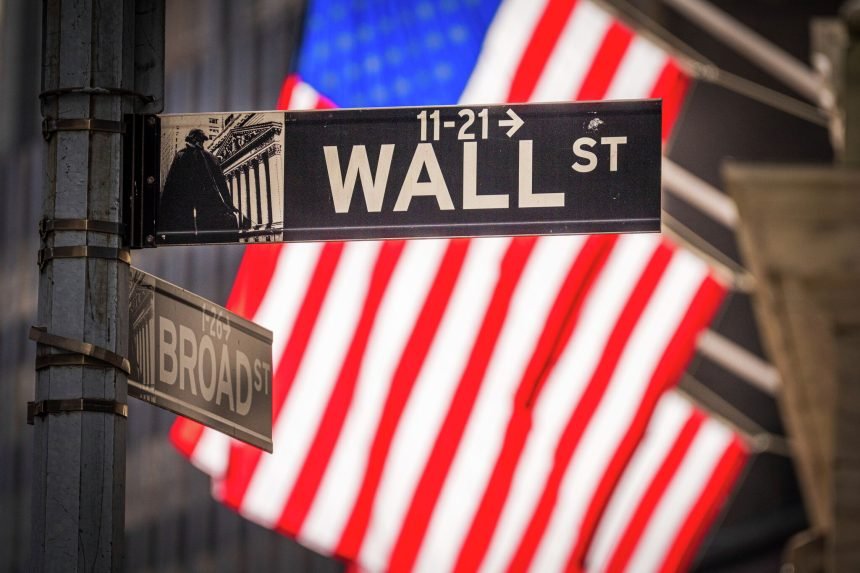
The sun shines through American flags flying in front of the New York Stock Exchange. When markets are uncertain, firms may hesitate to make investments in sustainability. Taking a longer view about sustainability would change this outlook.
J. David Ake/Associated Press

Significant gaps persist between what businesses achieve and the 17 Sustainable Development Goals from the United Nations that require countries to promote social, economic and environmental sustainability.

Achieving these goals can prove costly to firms.
Article continues below this ad
The COVID-19 pandemic, wars in Europe, intensifying global competition and rapid development of artificial intelligence have threatened revenue at many global firms.
Against this backdrop, sustainability commitments often weaken. Only 33% of business executives tie their compensation to achieving sustainability goals, according to a 2023 report by the Wall Street Journal and Deloitte.
Sustainability goals are championed when revenues are increasing, but when revenues suffer, these goals take a back seat.
This raises a critical question: What can businesses — and business management education — do to make sustainability goals more realistic and durable?
Article continues below this ad
Firms increasingly treat corporate social responsibility as a strategic investment rather than philanthropy. Similarly, environmental, social and governance investments require significant up-front costs by firms but only pay off in the long run.
When markets are uncertain, firms may hesitate to make these investments.
Research also shows that banks offering lower interest rates to firms clearly implementing sustainability initiatives may do so only when they believe those initiatives strengthen the firm’s financial performance.
Article continues below this ad
From a business perspective, sustainability investments are most likely to succeed when customers demand them and when they contribute to profitability.
H-E-B, for example, has been practicing sustainability for some time because customers demand sustainable products and the practice also brings in money. In January H-E-B was the top grocery chain in the U.S.
Many employees, students and customers are already attuned to sustainability issues. They prioritize products aligning with their standards on social and environmental issues. They are also willing to pay more for fairly traded products.
Firms should leverage these factors to build reputation, enhance profitability and advance sustainability goals.
Article continues below this ad
Business management education, such as Master of Business Administration programs, can play a critical role in advancing these goals as well. Universities and business schools must develop a culture that cultivates a sustainability mindset at every level.
University leadership must champion an incentive and evaluation structure to introduce sustainability factors for faculty, staff and students.
Subsequently, businesses hiring graduates trained in sustainability may face fewer internal barriers when implementing these goals.
Sustainability will not be achieved by aspiration alone.
Article continues below this ad
Corporate leaders must embed these initiatives into how their firms compete, how managers are trained and how success is measured.
Schools must do the same to educate the next generation in sustainable business practices. When sustainability makes strong business sense, it has a chance to endure beyond one fiscal year at a time.
Prasad Padmanabhan is professor emeritus at St. Mary’s University and professor at SolBridge International School of Business in Daejeon, South Korea.
Article continues below this ad
Have a response? Send us a letter to the editor.