- As big-box retailers focus on providing to the consumer shopping experiences in multiple formats, Ikea is the latest to add smaller-footprint stores.
- The idea is not new: Target, Macy’s, and Nordstrom have all added smaller square-foot locations in recent years; Walmart debuted its Express store over a decade ago; and the last remaining Kmart in the U.S. is a smaller format store.
- Data show the concept can pull in a more affluent demographic, but in some cases it’s more a case of location needs and targeted expansion strategies.
As shoppers search for deals this holiday season in an environment where less in price is more for many consumers, more Americans may find the square footage they visit in retail matching this “reduction” mantra.
Ikea is known for its behemoth blue and yellow big box footprint, often sprawling to 300,000 square feet in suburbia. But when they opened an 8,800-square-foot store in Gaithersburg, Maryland, earlier this year, they joined the latest in a long line of retailers to embrace a smaller-is-bigger strategy. Target, Macy’s, Nordstrom, and others have experimented with small format stores over the past decade. Kmart’s lone remaining U.S. outpost in Miami is a third of the size of its once dominant big boxes.
Chain store experiments with smaller formats go back to at least 2011, when Walmart introduced a “Walmart Express” concept to compete with dollar stores, but shelved the format five years later. Walmart has continued to open smaller format Neighbor Market concepts.
For Ikea, the smaller format stores are part of bringing the brand to where their customers are. Two more smaller format Ikeas opened this autumn, one in Alpharetta, Georgia, and the other in South Charlotte, North Carolina, bringing the total to 11.
“A Plan and Order point with Pick-up is one of many new format stores that are part of the growth strategy for Ikea U.S.— increasing accessibility to the brand and ensuring there are more ways to meet customers where they are and how they like to shop,” an Ikea spokesman said, saying that the smaller stores offer a more personalized experience.
“It is different from the traditional large-format Ikea stores as it gives customers the opportunity to meet with the Ikea store team to plan and order home furnishing solutions that require a bit more help,” the spokesman said, citing jobs like bathrooms and kitchens.
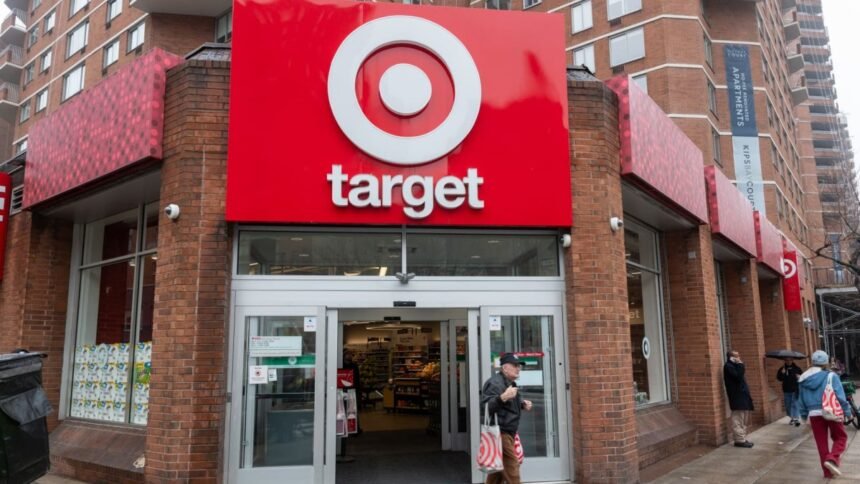
Target, which is dealing with major headwinds in the discretionary consumer market, is going smaller and larger simultaneously, opening some stores last year at 135,000-square feet — larger than its typical 125,000 square foot footprint — while continuing to open smaller stores, an effort that dates back to 2016. In 2024, it opened 10 stores at 20,000 square feet or less, usually in urban areas or tucked into neighborhoods around college campuses.
“Our flexible model allows us to bring the Target experience to life in any size or format,” said a Target spokesman, adding that they will continue to open both sizes of store.
Maximizing revenue per square foot of store
Shrinking stores don’t surprise Roger McMahon, professor of marketing at Pepperdine University’s Graziadio Business School and a retail expert. He says the current wave of shrinking stores’ roots goes back decades but is picking up speed. The 2010s brought the beginning of the shift to online shopping, and the pandemic accelerated it.
“Retailers have been scrambling to find a solution. Interestingly, research shows that most in-store shopping trips begin online, and many may culminate back online. As such, it is not an either/or proposition. Brands need to allow this behavior but also find a way to do it in a format that optimizes their metrics,” McMahon said.
And one of those key metrics is how much revenue is made per square foot. A massive space must work much harder to generate revenue per foot.
“The move to smaller stores is logical when we look at the layout of the large-format stores. The large format has wide aisles, generously spaced displays, and areas designed to entice patrons to sit and relax, hoping that more time in the store translates to more spending. This means that a significant amount of square footage does not generate any revenue directly,” McMahon said.
However, smaller stores can also evoke a “cozier” feel for the customer while giving the merchant what they want: more revenue per foot.
“If merchandised properly, the smaller format stores can create a more intimate shopping experience while increasing the revenue generated per square foot, thus making it a win for the customer and the company,” McMahon said. Ideally, “that connection will not only result in more brick-and-mortar sales but also translate to more online sales for the brand and a more loyal customer base,” he added.
Customers, though, issue mixed reviews on whether less really is more.
“The small Walmart neighborhood markets are great! Good for a quick run-in and picking up a few items. The smaller Targets just do not have everything that I need, so I never go to them anymore,” says Texas resident Mary Rhodes.
Meanwhile, Barbara Snedegar, who lives in the eastern suburbs of Cincinnati, prefers the selection of larger stores.
“I’m all in when it comes to one-stop shopping. The smaller stores…. I’m not so sure about,” Snedegar said.
Macy’s mall anchor stores have struggled as malls have become anchors on earnings. Earlier this year, the chain called for the shuttering of 30% of its underperforming stores. Macy’s has been trying to break free from the mall with smaller format stores for their Macy’s and Bloomingdale’s brands. Market by Macy’s and Bloomie’s are more miniature versions of their traditional department store formats.
Inside of the Bloomie’s store in Fairfax, Va., there’s a restaurant called Colada where shoppers can order mojitos, empanadas or other Cuban fare. Customers are encouraged to shop while sipping.
Data from Placer.ai illustrates the attractiveness of shrinking to grow.
“Consumers across the U.S. have migrated to smaller suburban and rural markets in recent years, and retailers often find that they don’t need the same size to accommodate these customers,” says R.J. Hottovy, head of analytical research at Placer.ai.
Placer.ai analyzed traffic to the Bloomie’s store in Skokie, Illinois, and found that its visitors primarily hail from areas with higher shares of urbanites than traditional format Bloomingdales.
“This indicates that Bloomie’s appeals to city dwellers – aligning with Bloomingdale’s goal of providing a contemporary, accessible, and convenient shopping experience in urban settings,” Hottovy said.
With retailers going smaller and bigger at the same time, it’s all about being everything to everyone, according to Michael Zakkour, founder of retail consultant 5 New Digital.
“Consumers have one overriding demand today,” Zakkour said. “‘Spoil me or else.’ Otherwise, they will seek out the retailer, brand, and service provider who will spoil them,” he said. Choice of format is an essential element of spoiling the consumer, he added.
But that “spoil” factor doesn’t mean luxury, specifically, and doesn’t require a physical presence at all.
“Just as the options for where and how to buy online have grown exponentially, intelligent retailers must provide varied options and choices in physical retail,” Zakkour said, citing experiments such as Walmart’s expanding commerce onto Roblox and into livestream shopping with REALM.
For chains like Ikea, which typically build costly big boxes, the scaled-down stores serve as a chance to plant their flag for a fraction of the cost.
“These stores help spoil the consumer; they show that the retailer is loyal to their needs and can act as forward operating bases for local deliveries and as mini-flagships,” Zakkour said.