Scientists just discovered 5.6 million bees under a New York State cemetery
This whopping bee aggregation is one of the largest and oldest ever recorded, according to a new study
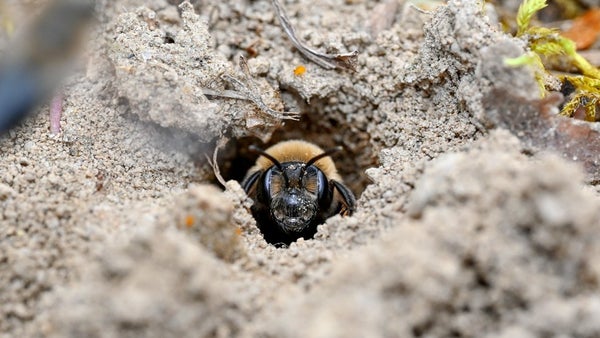
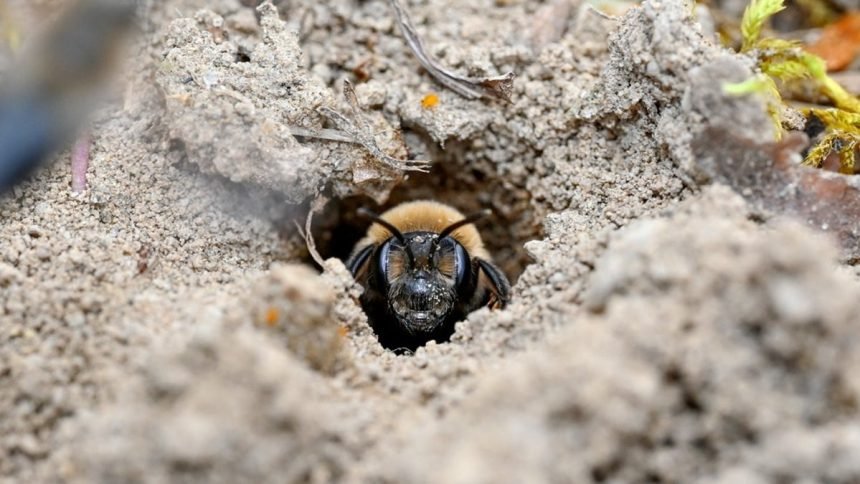
The regular mining bee (Andrena regularis).
A New York State cemetery may be home to nearly 5.6 million ground-nesting bees, according to a new study. The colony is one of the largest ever recorded and likely one of the oldest, the researchers note.
Though bees are often depicted as hive dwellers, the vast majority of species of these insects in the U.S.—around 70 percent—are in fact ground-nesting bees, or bees that burrow in the ground. These bees are often solitary, meaning they nest alone rather than in large groups, explains Bryan Danforth, an entomology professor at Cornell University and senior author of the new study.
Scientist have known that one species of these bees, Andrena regularis, has been at the East Lawn Cemetery in Ithaca, N.Y., since at least 1935. (The cemetery dates back to 1878.) But no one knew exactly how many bees lived there.
On supporting science journalism
If you’re enjoying this article, consider supporting our award-winning journalism by subscribing. By purchasing a subscription you are helping to ensure the future of impactful stories about the discoveries and ideas shaping our world today.
Over about a month and a half in 2023, researchers at Cornell University collected bees at various sites at around the cemetery and estimated how many members of A. regularis were living underground.
They found an “extraordinary abundance,” the scientists wrote in their paper, which was published on Monday in the journal Apidologie.
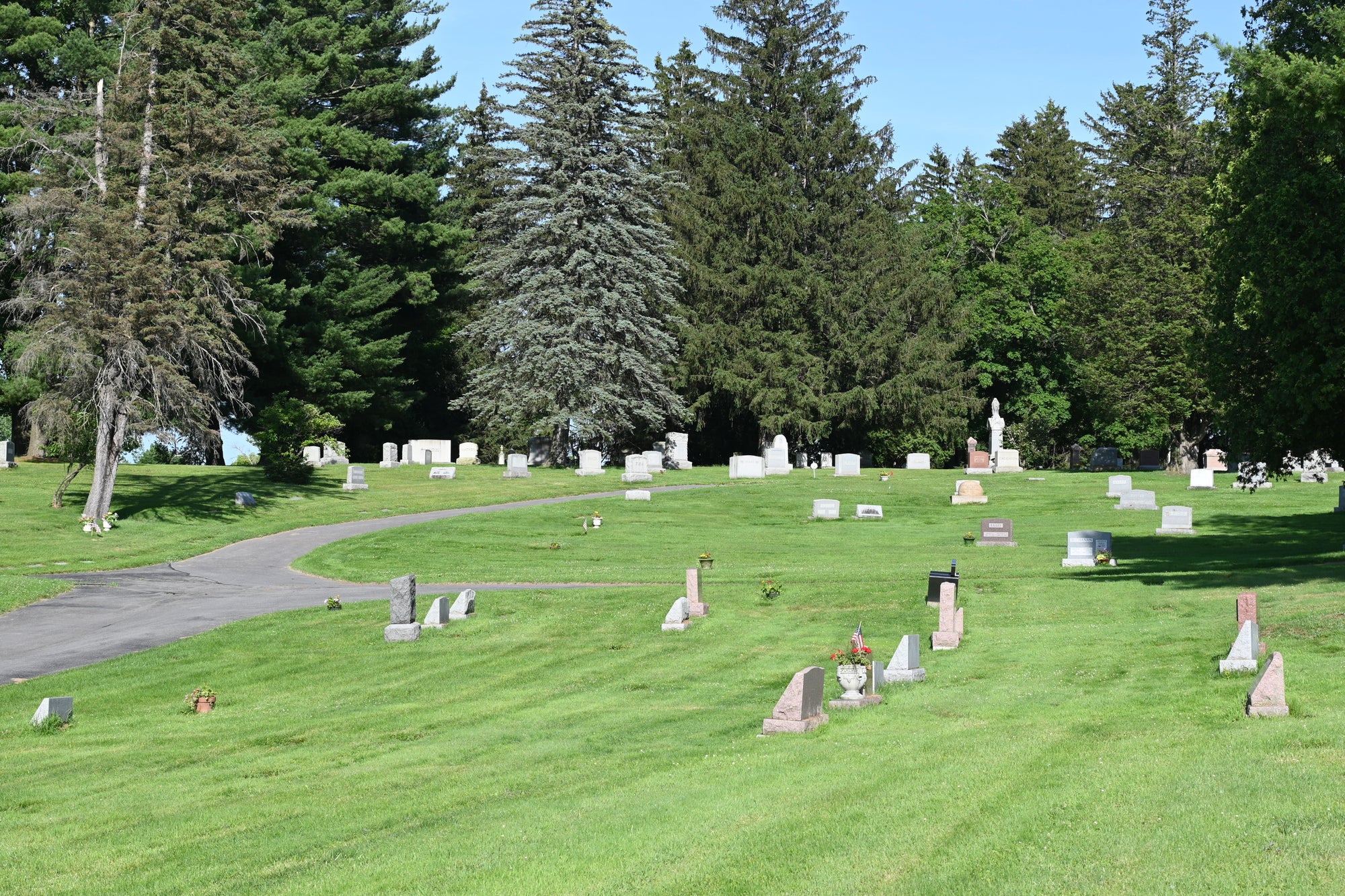
East Lawn Cemetery in Ithaca, N.Y.
Specifically, the group estimated that 5.56 million bees “emerged”—ventured out to forage and mate—in the spring of 2023 across an area of about 6,500 square meters. (For reference, the authors note, a honeybee colony typically includes around 30,000 individuals. On apple farms, where Danforth has conducted extensive research, you might find about two or three colonies per hectare, or about two football fields.)
“I was completely floored when we did the calculations,” Danforth says. “I have seen published estimates of bee aggregations in the hundreds of thousands. But I never really imagined that it would be 5.56 million bees.
One study in Arizona, the authors note, estimated some 1,615,000 Centris caesalpiniae bees emerged from a 1,290-square-meter site in one year. Another study tallied 651,440 Melissodes bimaculatus bees on a suburban lawn in upstate New York, while a third study estimated there were approximately 13,500 Epicharis picta bees in a 160-square-meter site in Brazil.
The new research points to the importance of cemeteries as habitat for ground-nesting bees—an “exceptionally important” pollinator, Danforth says.
“The solitary bees are totally underappreciated. I spend a lot of time trying to encourage people to appreciate the solitary bees, just because they do so much, and they’re kind of under the radar,” Danforth adds. “But they’re fascinating creatures.”
It’s Time to Stand Up for Science
If you enjoyed this article, I’d like to ask for your support. Scientific American has served as an advocate for science and industry for 180 years, and right now may be the most critical moment in that two-century history.
I’ve been a Scientific American subscriber since I was 12 years old, and it helped shape the way I look at the world. SciAm always educates and delights me, and inspires a sense of awe for our vast, beautiful universe. I hope it does that for you, too.
If you subscribe to Scientific American, you help ensure that our coverage is centered on meaningful research and discovery; that we have the resources to report on the decisions that threaten labs across the U.S.; and that we support both budding and working scientists at a time when the value of science itself too often goes unrecognized.
In return, you get essential news, captivating podcasts, brilliant infographics, can’t-miss newsletters, must-watch videos, challenging games, and the science world’s best writing and reporting. You can even gift someone a subscription.
There has never been a more important time for us to stand up and show why science matters. I hope you’ll support us in that mission.