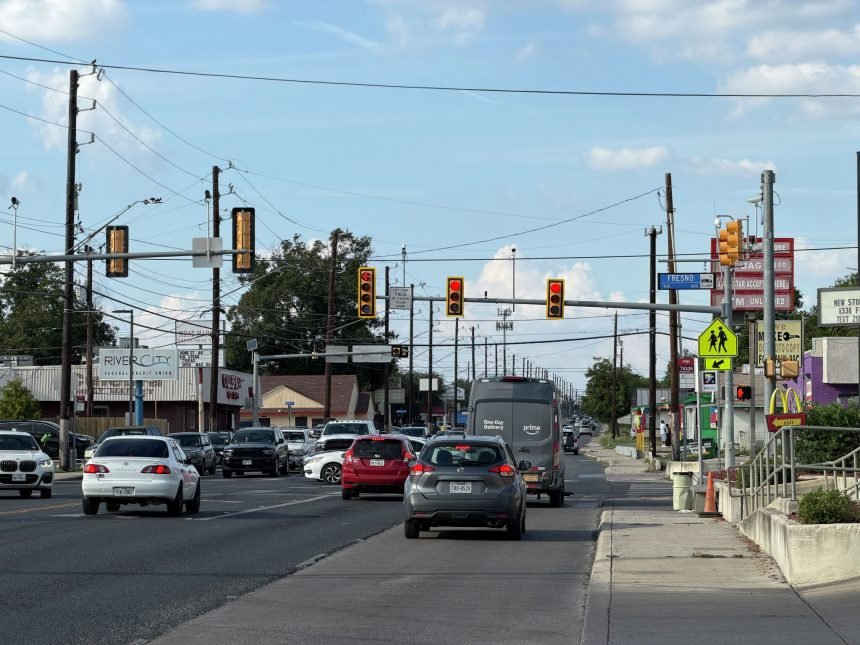
The stretch of Blanco Road near Fresno – north of downtown by a few miles – has become a bit of an industrial zone. For several blocks, a smattering of auto repair shops and vehicle resale lots line the Northside street, separated by family dollars or small local shops. But behind them are rows and rows of single-family homes (some a century old). But a big decision made by San Antonio City Council could reshape the area, and that’s got residents crying foul.
From Fresno Street down to West Hildebrand Avenue (about nine city blocks), the city has approved a sweeping rezoning effort at the behest of District 1 Councilwoman Sukh Kaur. The business lots along Blanco Road face more restrictive uses, with many switching from industrial zoning to commercial.
For the most part, existing businesses may continue. But the zoning shift creates more room for a neighborhood-oriented business corridor and a reduction in industrial use (think Broadway’s business district and less Somerset Road on the Southwest Side).
But it’s the housing changes that have the neighborhood most upset. April Moldonado, speaking on behalf of the Edison Neighborhood Association, said a majority of residents opposed the change, mostly because they objected to rezoning dozens of single-family homes to multifamily housing – a change that would allow duplexes, triplexes, fourplexes and townhomes.
She says the residents she spoke to while going door to door to gather signatures for the petition on the residential piece are more comfortable with the change affecting the businesses along Blanco Road.
“The Neighborhood Community Plan was made in 2002 for the whole Edison area … one of the plan’s purposes was to encourage neighborhood-friendly businesses and neighborhood commercial uses,” Moldonado said. “We do want to see our neighborhood move forward, get revitalized and have things done. But we’d like to see that happen on a smaller scale, kind of like the Beacon Hill area.”
The biggest concern is the impact multifamily housing can have on the neighborhood, says Maldonado. She says a drunk driver has already gone through her home midday, and she says a block of duplexes already erected is causing friction in the neighborhood – not to mention increased traffic on an already congested Blanco Road.
“We want to see progress, but we’d like to talk about what that progress looks like,” Maldonado said. “The plan was meant to discourage higher-intensity uses.”
Ultimately, the San Antonio Zoning Commission voted unanimously to recommend approval, and City Council made the final decision on September 3. Despite six residents voicing concerns about the impact of multifamily housing on traffic, property values, taxes, utilities, parking and the deterioration of the neighborhood’s single-family charm.
“I grew up across the street from where I currently live and chose to come back because of how special the neighborhood is. There are a lot of stories like mine where there’s generations of families that come back that live doors down from each other and appreciate the character of our neighborhood,” Jeanette Bara said, addressing City Council on September 3. “I worry that the rezoning will affect the infrastructure that we already have.”
Councilwoman Kaur explained that the rezoning of homes was intended to resolve a problem identified by a resident. The home was zoned for industrial use. She also clarified that any resident who opposed a zoning change was removed from the list of properties impacted.
“I just wanted to convey that, again, this comes back to ensuring we are creating a San Antonio where our kids can live and all the homes there – we’re not going in and bulldozing the homes. The homes will stay,” Kaur said.